

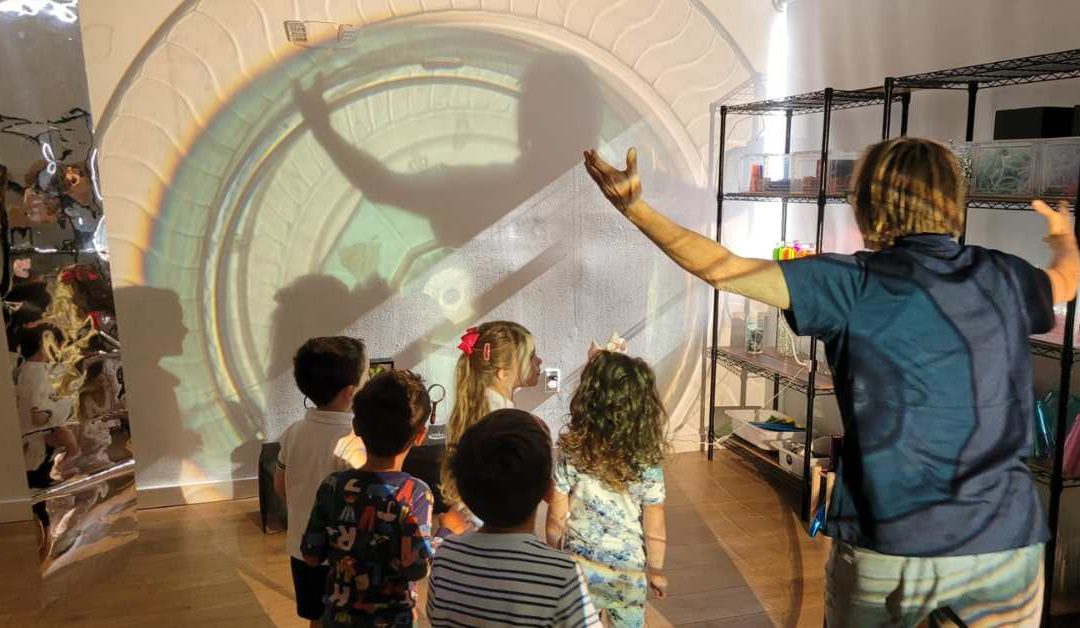
Reggio Emilia vs Traditional Education: What’s the Difference?

By Jessica Pinto, Head of School, La Piazza Academy
If you’ve been researching schools, you’ve probably come across the term Reggio Emilia.
Many parents ask me:
What is the difference between a Reggio Emilia school in Miami and a traditional school?
The answer is simple but powerful.
It’s a completely different way of seeing the child.
The Image of the Child
In traditional education, children are often seen as empty vessels to be filled with information.
In the Reggio Emilia approach, children are seen as:
- Capable
- Curious
- Full of potential
They are active participants in their learning—not passive receivers.
The Role of Creativity
In many traditional schools, art is a separate subject.
In a Reggio Emilia-inspired school, creativity is part of everything.
Children express ideas through:
- Drawing
- Building
- Storytelling
- Exploration
This is why environments often include an atelier (creative studio) where children can bring their ideas to life.
Learning Through Projects
Instead of following rigid textbooks, children engage in project-based learning.
They explore topics deeply, based on their interests, asking questions and discovering answers over time.
This creates:
- Deeper understanding
- Stronger engagement
- A true love for learning
The Teacher’s Role
In traditional education, the teacher is often the main source of knowledge.
In the Reggio approach, the teacher becomes:
- A guide
- An observer
- A collaborator
They listen, adapt, and support each child’s unique learning journey.
When I first discovered this philosophy, it resonated deeply with me as a mother.
At La Piazza Academy, being a Reggio Emilia-inspired school in Miami means we truly honor each child’s voice, creativity, and individuality.
If you are choosing between traditional and education, ask yourself:
Do I want my child to follow a system…
or to be understood within it?
That answer will guide you.